Traditional financial advisory is no longer sufficient to attract clients. Accustomed now to services like Amazon, Spotify, and Netflix, where personalization is the watchword, these clients (or prospects) expect the same treatment in managing their savings. Also, because they often are no longer willing to pay for a consultant’s work when they don’t perceive its true added value.
Let’s also consider that the sector is gearing up for the arrival of the Retail Investment Strategy, a new European regulation under which consultants must demonstrate that they have selected the type of products proposed in the best interest of the clients and have chosen – among those available on the market – products with the best “value for money.”
Beyond just investing: it’s about embracing the client’s entire financial life.
In short, the sector is changing, driven by regulation and technology. And the service offered by the consultant must necessarily evolve to better communicate the added value it provides
Offering value-added service means changing the starting premise: today, the point is no longer simply to grow the client’s capital but to improve their overall financial well-being, ensuring that all their needs are met.
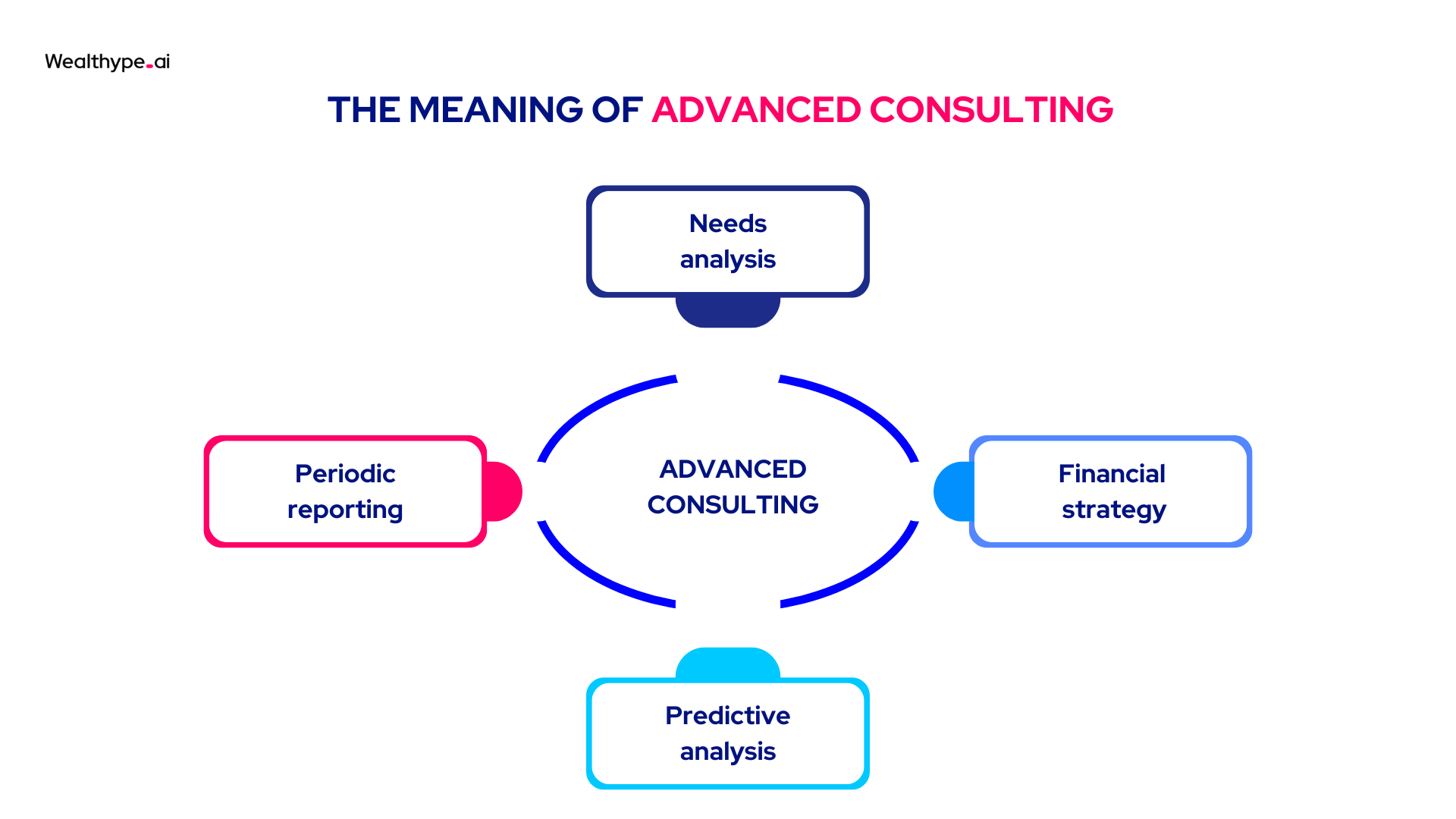
In fact, to invest well, it’s important to focus on one’s long-term needs, primarily covering from the main risks: setting up supplementary income for retirement, protecting against unforeseen events with appropriate insurance coverage, planning generational transitions, and so on. But conveying this message to the client isn’t straightforward.
To try to meet these new business needs, we at Wealthype have leveraged the cross-functional expertise of our team, ranging from data journalism to financial data science, and have prepared an analytical, modular, and personalized report that we can generate with a few clicks for each individual client.
Starting from the data available at the bank – whether few or many – we can create a document of a few pages in which we map the client’s financial needs (or prospects) and connect them to the most suitable financial instruments to meet them (in full compliance with the guidelines contained in the RIS). The goal is to improve the individual Financial Wellness Index, i.e. the alignment of a client’s portfolio with their actual financial needs.
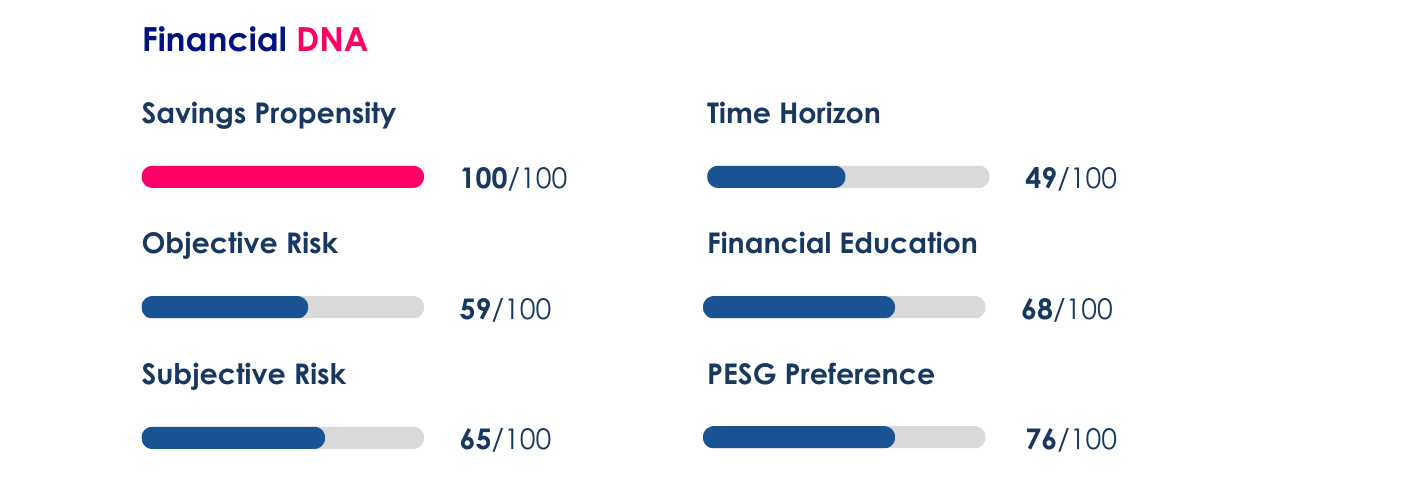
The report uses simple and direct language to address complex topics like money and investment management, identifying the important things for the client to pay attention to (insuring against risks, pursuing their financial well-being, and meeting financial needs). It is useful for helping the client understand the importance of focusing on long-term needs, without being distracted by short-term market fluctuations: in other words, we try to isolate the “signal” from the background noise.
Starting from very little information – such as demographic characteristics, place of residence, and profession – the system places the client (or prospect) in the corresponding “cluster,” assimilating them to the financial persona most in line with their characteristics.
Our platform doesn’t replace the work of a consultant but enhances it, helping the professional better convey the value of their activity to clients. Like all tools, even the most sophisticated, it doesn’t work “on its own”: it needs a human mind to handle the “grounding”.
At the end of the day, it all comes down to the relationship with the client.
For a demo of our tools, you can contact us using the link below and discover how to apply Machine Learning logic to your business processes.

 Back
Back