
“We focus a tremendous amount of energy on helping people live longer lives. But not even a fraction of that effort is spent helping people afford those extra years.” Larry Fink, CEO BlackRock.
The largest intergenerational transfer of wealth in history is upon us, and clients have new needs.
Demography is a fascinating science that influences the growth and evolution of our societies. Today, after a very rapid increase that has strained our planet, the world is facing a turning point: the world’s population should first stabilize, albeit with considerable geographic diversity, and then begin to decline. In the West, this trend has already begun for some time: we are having fewer and fewer children, having them later and living longer.
If we look at the Italian situation, the so-called population pyramid is becoming a rhomboid, more and more like a rectangle. The core of the active and productive population, which includes the last band of Baby Boomers (1946-64) and Generation X (1965-1980), will be approaching retirement and will not be replaced in consistency by Millennials and the so-called Gen Z. The repercussions on the public welfare system are obviously very significant: it is unthinkable that the state can take over health, welfare and pensions as it does today.

Source: PopulationPyramid.net
The good news is that although the Italian population is destined to age, today we are aging better and feel young longer. If 30 years ago a 60-year-old was considered old, today the perception has changed a lot: according to SIGG (the Italian Society of Gerontology and Geriatrics), a 65-year-old today has the physical and cognitive fitness of a 40-45-year-old of some 30 years ago: to be considered “old” today you have to be 75 years old. Recently published AIPB research confirms this trend.
Today we live and work very differently from the previous generation. Even Boomers, and even more so Generation X, are different from their parents at the same age: they are more active and work longer, they are more health and appearance conscious, much more digital and physically active, and they travel and move more[1].
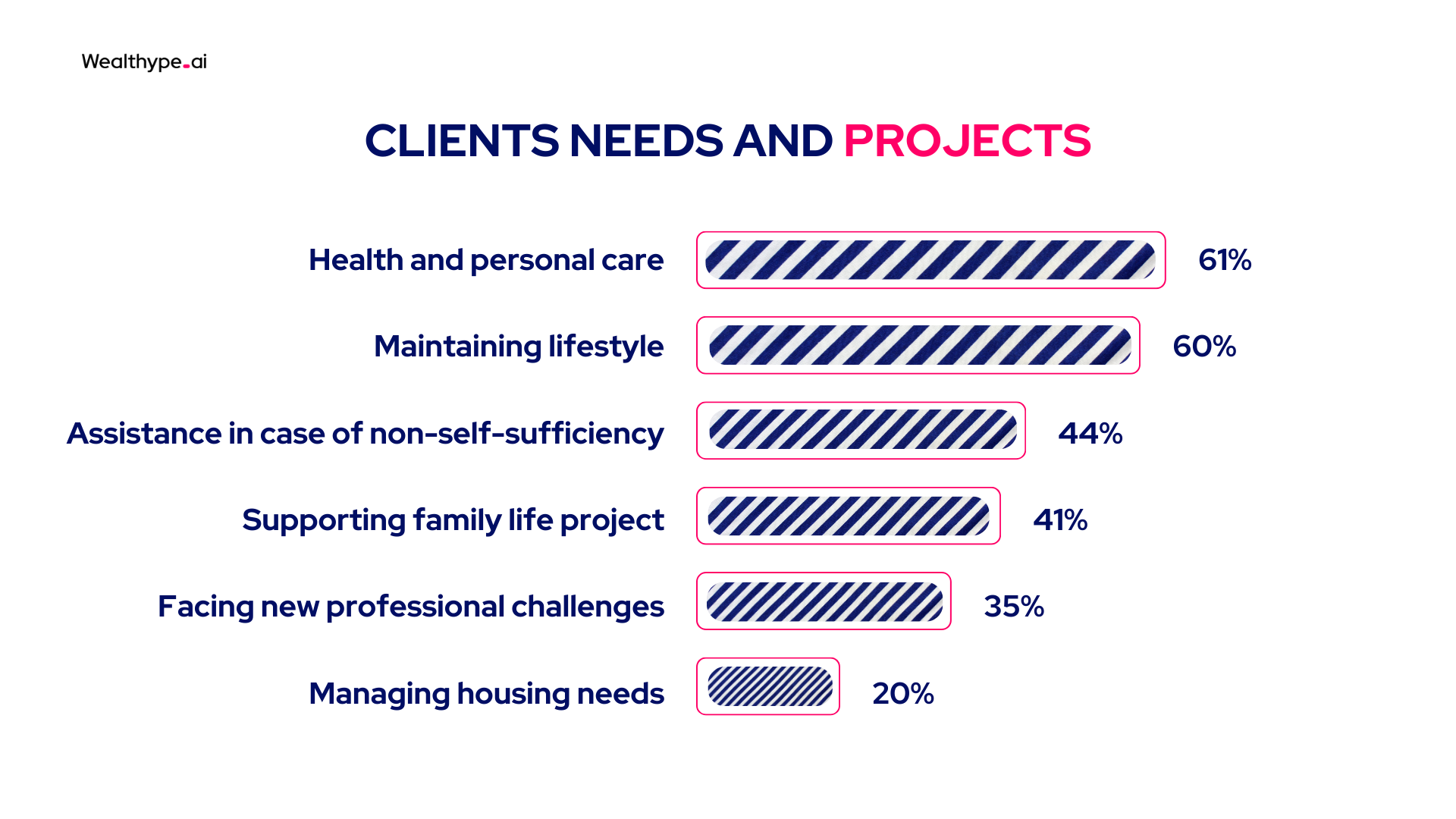
Source: AIPB – Indagine sulla clientela Private in Italia
According to the interesting research “Private Banking in a Longer-Lived World” by KPMG and AIPB, the long-term priorities of non-young clients reflect these changes. What about the private banking industry? For some time now, there has been talk of the so-called “Great Wealth Transfer,” the largest intergenerational transfer of wealth in history. In the coming years, AIPB estimates a major shift of wealth to younger generations, projected at over 180 billion euros by 2028 and over 300 billion by 2033 [2].
The implications for the wealth management industry are clear.
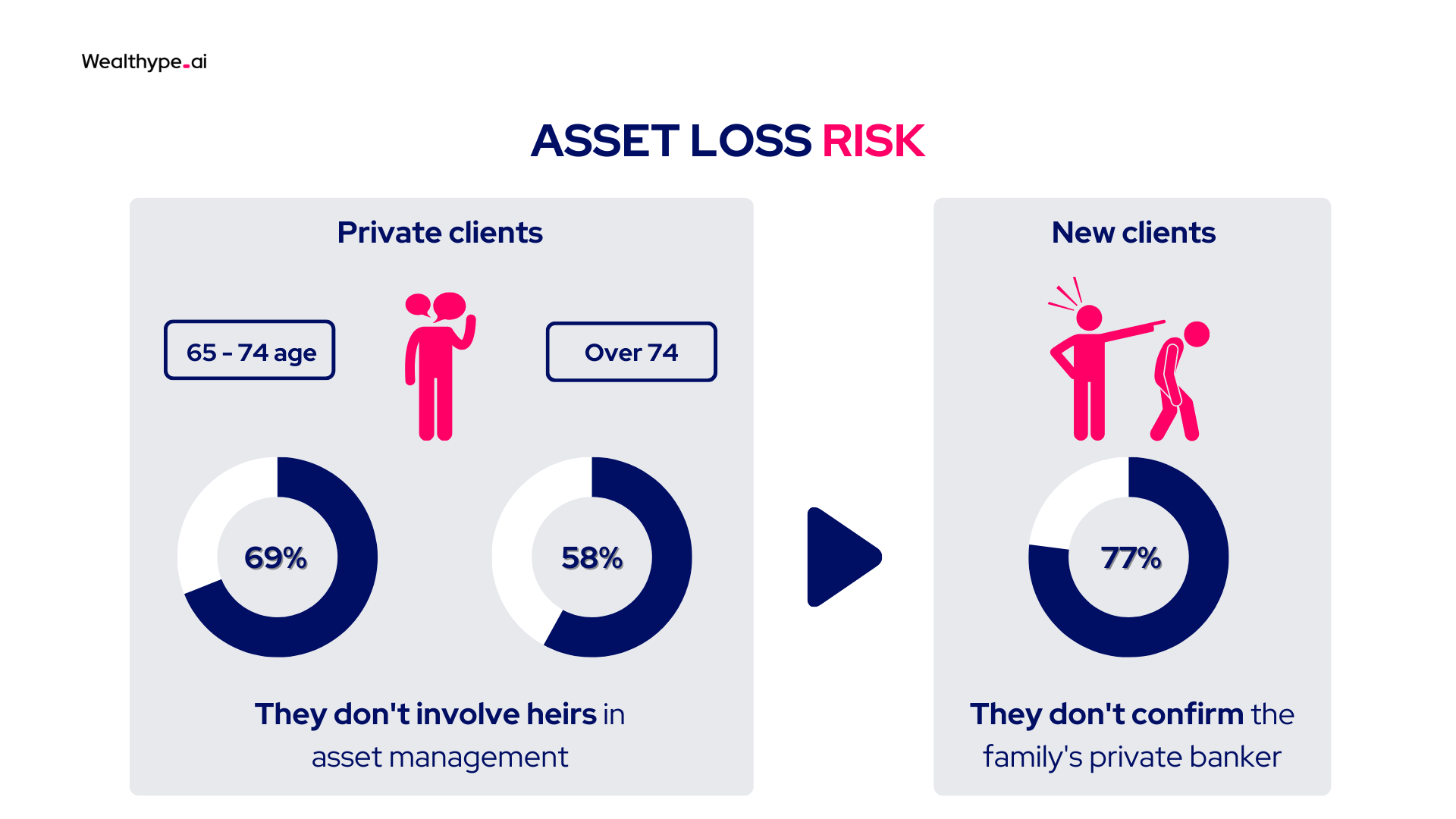
Source: AIPB – Indagine sulla clientela Private in Italia
Like any change, changing demographics can turn into a major growth opportunity for the industry, aided by new technologies. But for this to happen, several changes are needed. Our Wealthype Platform can be a valuable ally in this journey, helping advisors re-tune to the changing needs of clients thanks in part to the use of technologies such as AI and data enrichment.

[1] Quando si diventa “anziani”?
[2] AIPB e KPMG: il Private Banking in un mondo più longevo
For a demo of our tools, you can write to us at “info@wealthype.com” and find out how to apply Machine Learning logic to the traditional consulting process.

 Back
Back