Choosing a financial advisor is not like buying a pair of shoes. When approaching the world of financial consulting, people often focus exclusively on the technical and regulatory aspects, overlooking what truly matters in selecting one advisor over another. In a landscape where financial products are often similar, and only a few clients have the expertise to fully evaluate their differences, what is the real added value?
It is not the best product that makes the difference. The key is the ability to build a long-term relationship of trust with the client. The quality of the relationship between advisor and client is what distinguishes the best professionals. For this reason, firms seek out advisors who are not only competent but also capable of building strong human relationships. In fact, the heart of financial advising is not execution, but trust, empathy, and mutual understanding.
A good advisor is not just a technical expert; they are an ally in planning a family’s future, a confidant who understands the client’s deep values, such as financial freedom, security, and dreams for their children. This relationship goes far beyond the purchase of a good or a professional service.
Traditional financial advisory platforms focus on efficiency and compliance. Wealthype, on the other hand, takes innovation to a higher level by putting artificial intelligence at the service of the advisor-client relationship. Our solutions not only improve the quality of service but also strengthen the trust relationship, making business negotiations smoother.
Here’s how artificial intelligence can transform financial advising:
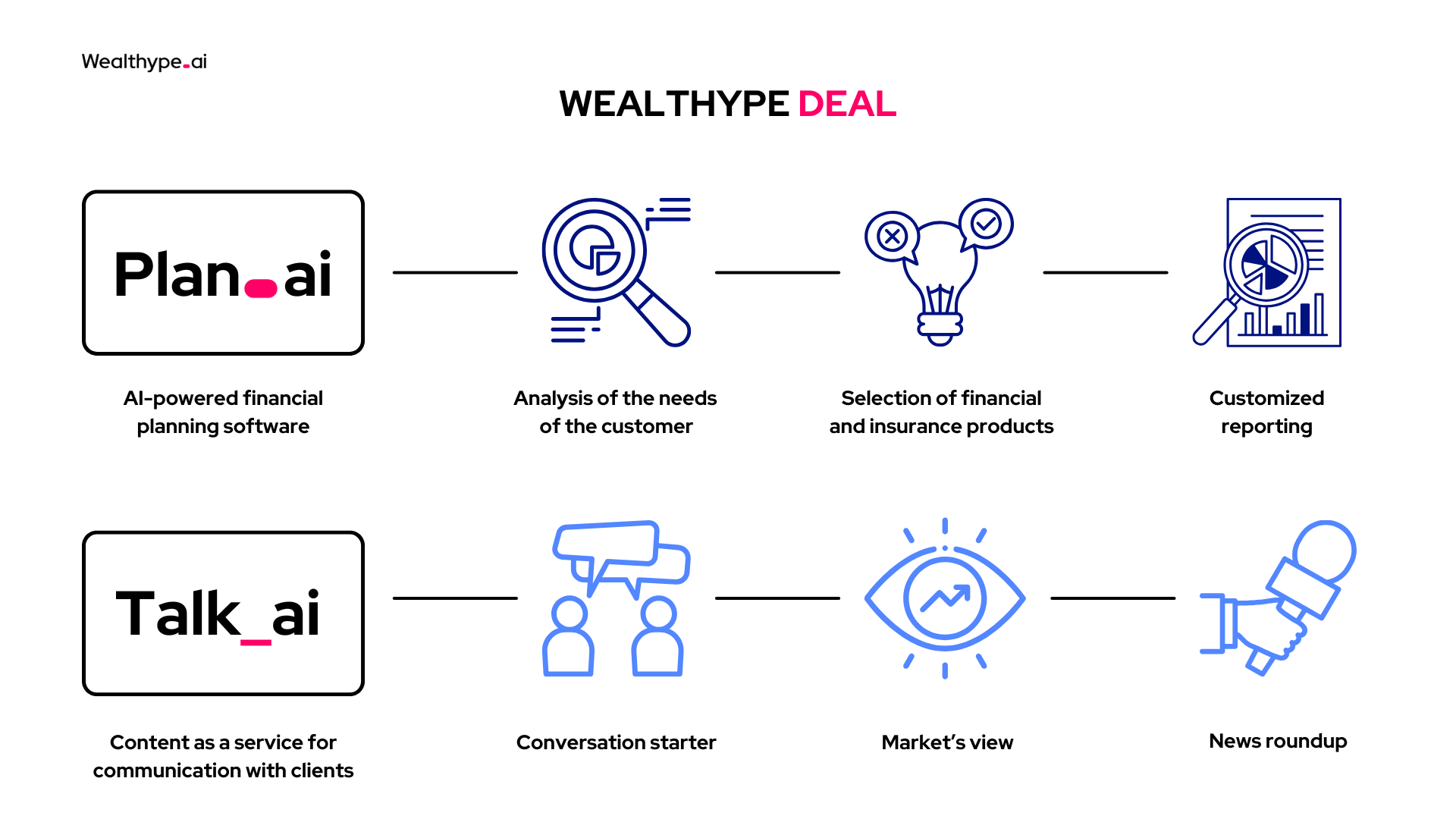
Wealthype’s technology helps advisors establish deeper, more personalized connections with clients through:
In conclusion, through an approach that puts the client at the center and values the relationship, Wealthype allows financial advisors to offer a unique service, strengthening trust and building lasting relationships.
For a demo of our tools, drop us a line at info@wealthype.com and see how to apply machine learning principles to traditional advisory processes

 Back
Back